


Movie sword replica dining table project.


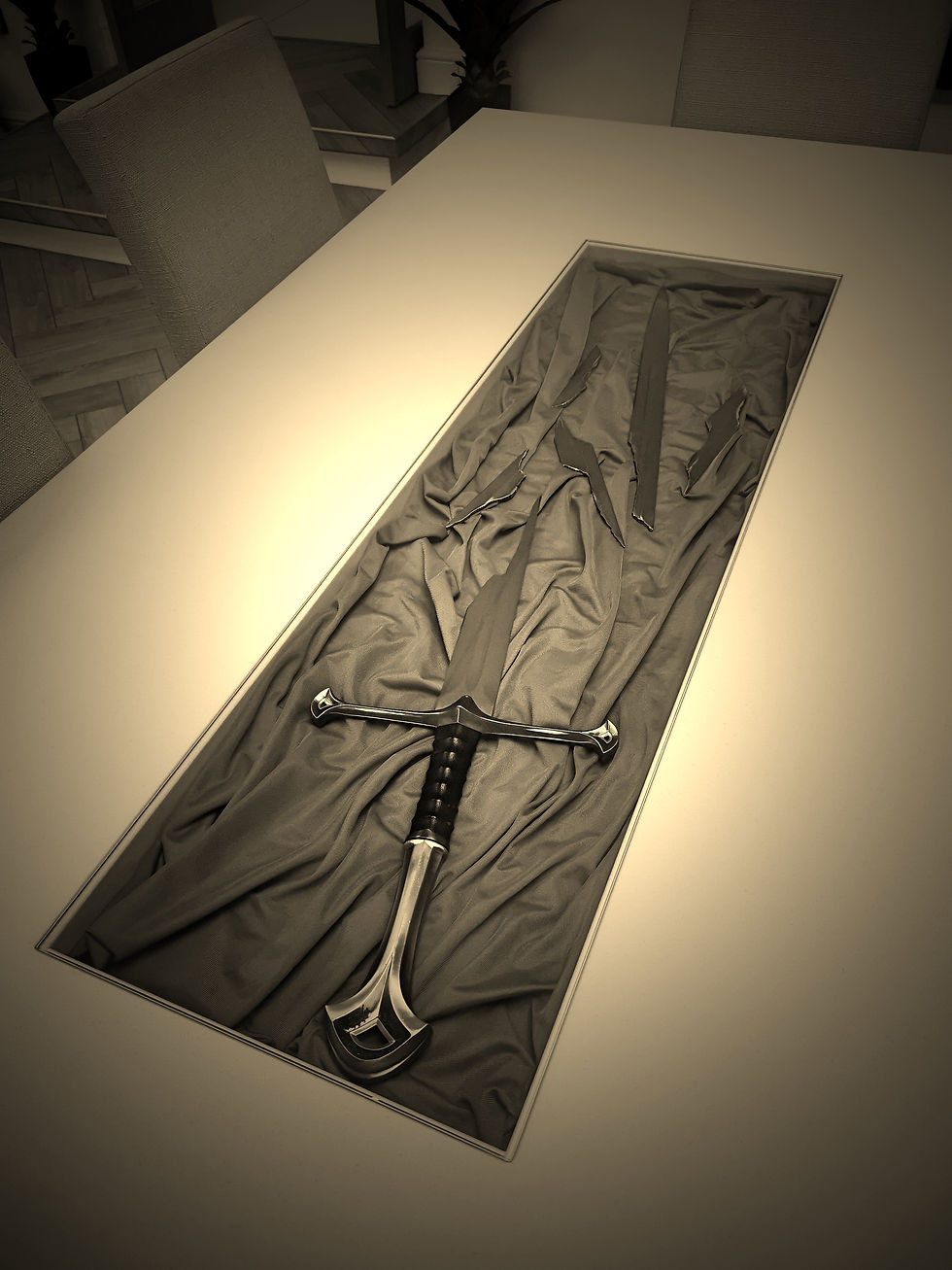
Lord of The Rings - Shards of Narsil display.
The original dining table had a clean concrete-effect solid-surface top. Perfectly functional, but there was an opportunity to turn it into something far more personal.
The idea was to transform the surface into a bespoke dining table centred around a Shards of Narsil replica sword, creating a flush-glazed display that would become part of the furniture itself.
Visually, the concept was simple.
Structurally, it created a few problems.
More than cutting a display into the table
The table top is a solid-surface material, fabricated as a custom piece using the same type of manufacturing process used for kitchen worktops. A matching sideboard was made in the same material.
It is hygienic, hard-wearing and well suited to a dining table, but this was a large eight-seater top weighing more than 60 kilograms.
The display opening needed a narrow lip within the cut-out to support 10mm glass. The glass needed to sit flush with the finished table top, keeping the dining surface clean and allowing the display to feel integrated into the furniture.
It also meant removing material from almost exactly the area where the design of the table legs naturally concentrated the weight of the top.
The trickiest obstacle was the table legs
The narrow-spread design of the table legs meant the weight of the finished top would be supported across a relatively small area.
Unfortunately, that area was almost identical to the position of the new sword display.
Simply placing the finished top onto the legs would have put pressure directly around the display opening.
A sub-top was needed to sit over the legs, spread the load and support the solid-surface top without pressing into the display area.
Solving the support problem immediately led to the next issue.
Height.
The support had to stay shallow
The thickest part of the sword hilt dictated the depth of the display.
Once the 10mm glass was included, the finished table slab needed to be a minimum of 50mm deep to accommodate the replica and still allow the glass to finish flush with the table top.
The display depth had already increased the overall depth of the table top, so there was very little room to add support beneath it before the finished dining table started to feel too high.
An 18mm plywood sheet was cut to create the sub-top and spread the load across the leg structure. The exposed edge was finished with dark-grey kitchen edging to keep the supporting section visually consistent with the rest of the table.
The studs beneath the table feet were also removed and replaced with felt to reduce the finished height by a few more millimetres.
Each part of the solution affected the next.
Creating a flush glass display
With the structural and height problems resolved, attention could return to the part everyone would actually see.
The display opening had been designed with a narrow internal lip to support the 10mm glass. This allowed the glass to sit flush with the surrounding solid-surface table top rather than appearing as a separate display case added afterwards.
That detail mattered.
The aim was for the Shards of Narsil display to feel as though it had always been part of the table design.
Not something fitted into it later.
Finding the right backdrop
The base of the sword display went through numerous experimental versions.
Different finishes changed the appearance of the replica and the overall feel of the display, so this was one of those details that needed trying rather than guessing.
Eventually, I settled on satin material.
The satin was arranged meticulously to create the finished backdrop for the Shards of Narsil display. Once the display was complete, the glass was bonded into place.
Still a dining table
The display creates the drama, but the table still needed to work as an eight-seater dining table.
The solid-surface top remains hard-wearing and easy to maintain. The glass sits flush with the table surface and the display is contained within the furniture rather than dominating the room.
Until you look at the centre of it.
Then it becomes a conversation piece.
Bespoke ideas usually create their own problems
The initial idea for this project was straightforward: display the Shards of Narsil within the dining table.
Making that happen meant considering the weight of the table top, the position and spread of the legs, the support required around the display opening, the depth of the sword hilt, the thickness of the glass and the final comfortable height of the table.
Each decision affected the next.
That's often the reality of bespoke work.
The idea is the starting point. The interesting part is working out how to make it function properly and look as though it was always meant to be there.
If you're a The Lord of the Rings fan, you may also like my sword display niche project, where replica swords were incorporated into a purpose-built illuminated wall niche.
Do you have a bespoke project you'd like to discuss?
If you're planning a bespoke interior project in Stourbridge, Solihull or elsewhere across the West Midlands, or have an unusual collection or feature you'd like to incorporate into your home, I am always happy to discuss what might be possible.
Sometimes the project starts with a room.
Sometimes it starts with a sword.
Do you have a project you'd like to discuss?